
Wir durchsuchen 2.085.477 Objekte für Sie.


Auction: 19 days
As of Oct 21, 2026
Manolo Valdés (b. 1942) La Infanta Margarita, 1992 Tarara Amarilla (Canary wood) 85 x 54 x 30 inches (215.9 x 137.2 x 76.2 cm) Property from a Southern California Collection PROVENANCE: Marlborough Gallery, New York. NOTE: We wish to thank the Manolo Valdés Studio for their gracious cataloguing assistance. What remains of an old master when the room, the attendants, and even the sitter's face disappear? In La Infanta Margarita, Manolo Valdés answers with a silhouette. Standing more than seven feet high, the young princess familiar from Velázquez's Las Meninas is recast as a monumental wooden presence. Her identity survives in a few essential forms: the broad bell of her court dress, the narrow torso, the formal arrangement of her hair, and the small oval where a face ought to be. Valdés strips away detail without losing recognition. The result is less a portrait in the conventional sense than an exploration of how images lodge in cultural memory. Valdés had spent decades working with precisely this kind of recognition. In 1964, he co-founded Equipo Crónica, the influential Spanish collective whose politically charged Pop language recirculated familiar images from the history of art. Following the death of Rafael Solbes in 1981, Equipo Crónica ended and Valdés began working independently, retaining art history as his subject while developing an increasingly tactile and personal language. If Equipo Crónica treated museum masterpieces as a kind of public vocabulary, Valdés's solo work approached them as raw material. Velázquez became not an authority to imitate but a source to examine, dismantle, and reconstruct. In this respect, Valdés belongs to a distinctly Spanish tradition of artists returning to Las Meninas, most famously Picasso in his celebrated 1957 series. Yet where Picasso reworked the painting's complete cast and composition through a sustained sequence of variations, Valdés isolates a single remembered form. The complicated court interior disappears. So do the attendants, the mirror, the dog, and Velázquez himself. What remains is Margarita, removed from the narrative and allowed to occupy the entire field. Here, that familiar form is built from Tarara Amarilla, or Canarywood, whose irregular joins, open fissures, and emphatic grain remain plainly visible. The princess's silk and embroidery have become seams, cuts, and rough planes. Passages of yellow, orange, and reddish brown move across the surface, at times recalling flashes of gold thread while also calling attention to the physical character of the wood. The enormous skirt reads almost like architecture: patched, weighty, and carefully constructed. Even the openings beneath her arms admit light into the sculpture while emphasizing how the figure has been assembled. Executed in 1992, two years after Valdés made New York his base, La Infanta Margarita translates a deeply Spanish image across centuries, materials, and geography. Scale is central to that transformation. In Las Meninas, Margarita is a young child surrounded by the busy machinery of court life; here, the court has vanished and the child has grown into a monument. The effect is both respectful and sly. Valdés preserves the image by refusing to preserve all its details. What remains is the part history remembers first: a shape, a posture, and a presence, rebuilt in wood. HID12401132022 © 2026 Heritage Auctions | All Rights Reserved www.HA.com/TexasAuctioneerLicenseNotice
Marlborough Gallery, New York.
Presents well. Some dust evident in recesses, otherwise no condition issues to note.


 Pablo Picasso
 Tomoo GOKITA
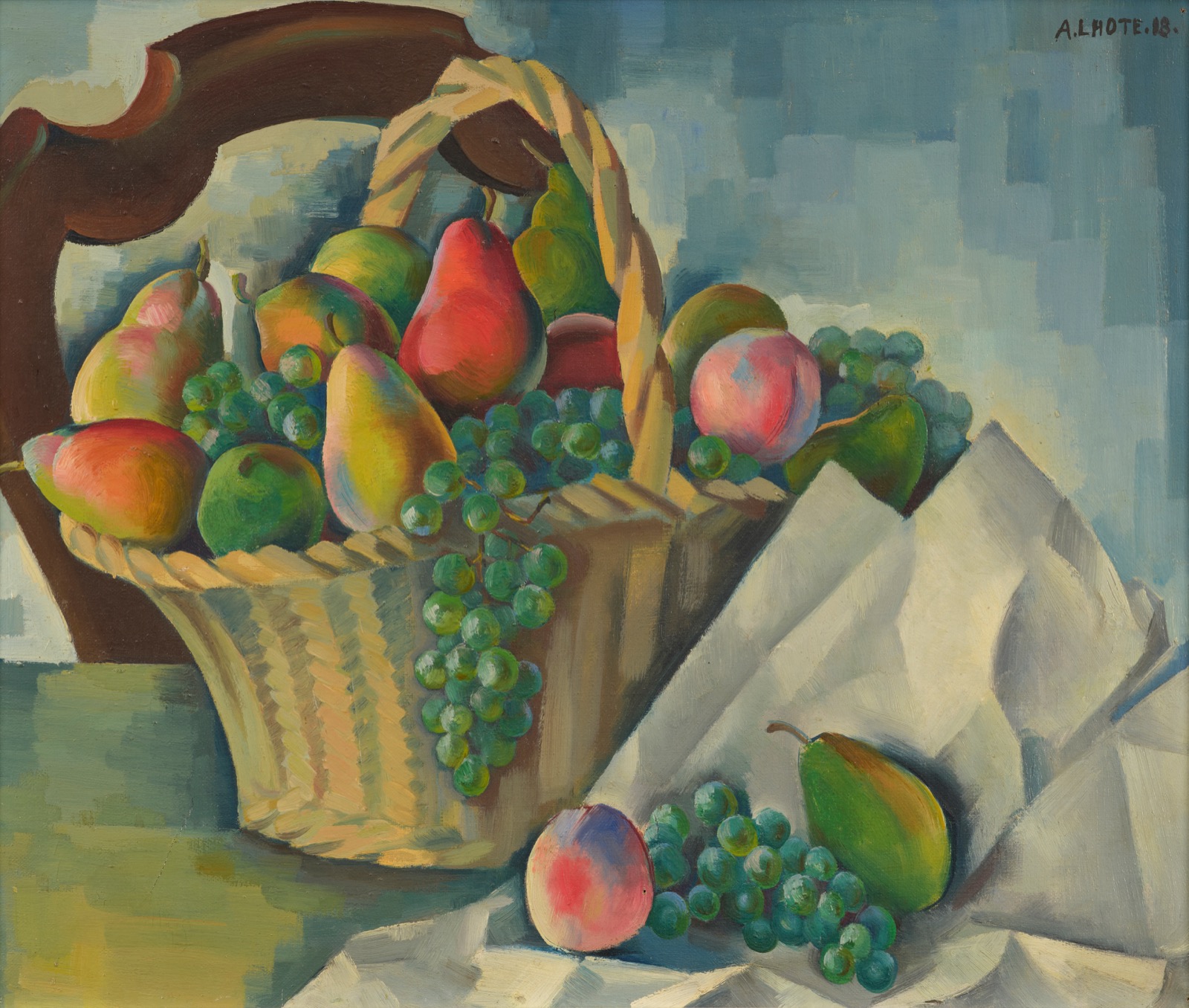 André Lhote
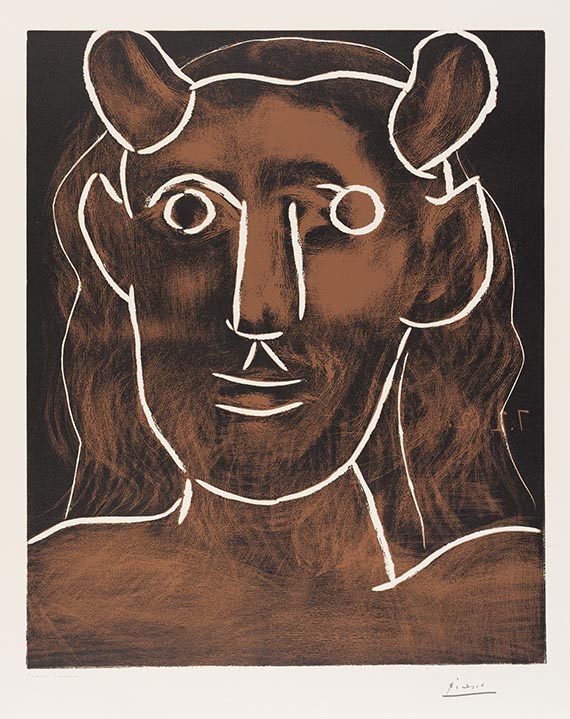 Pablo Picasso

